
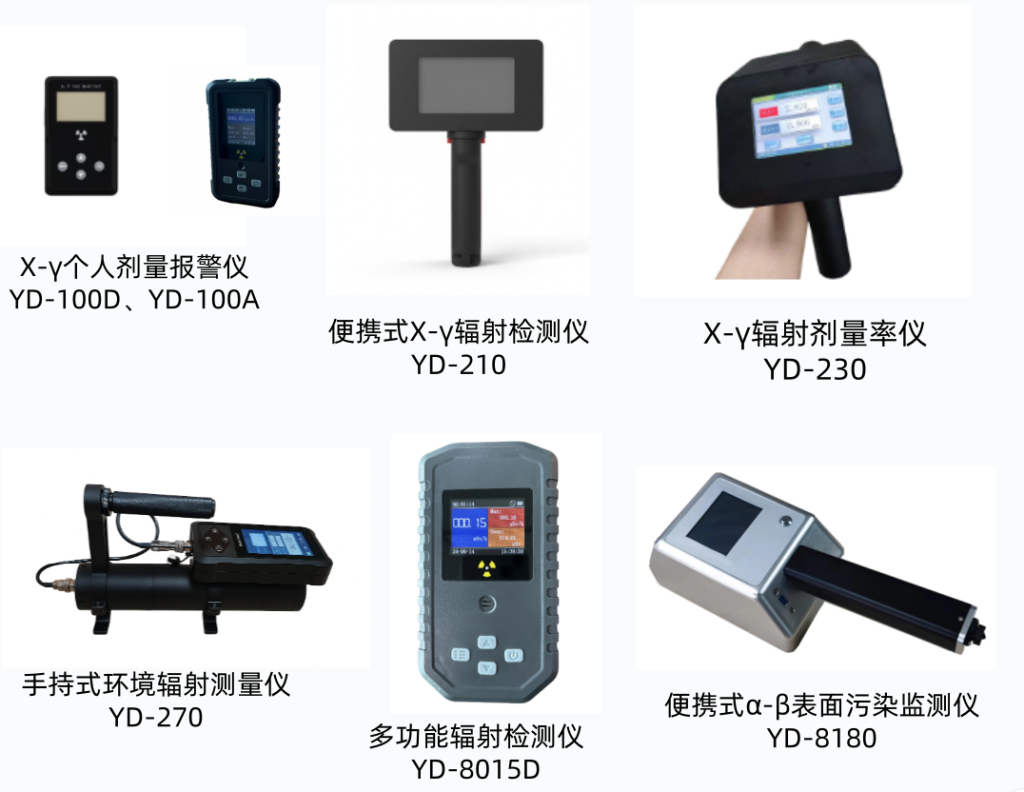
With the expansion of medical applications, the nuclear industry, environmental monitoring, and industrial non‑destructive testing (NDT), radiation safety has become an issue of growing concern. Whether in a hospital radiology department, a disease control center, an industrial radiography site, a mine, or a laboratory, a reliable radiation detector is often the key tool for safeguarding personnel and ensuring data accuracy.
However, given the wide variety of radiation instruments on the market, many users face a common question during the selection process:
What type of radiation detector is truly suited to my specific application?
This article approaches the question from an industry‑technical perspective and provides a systematic, clear answer.
1. Start with the Basics: What Are You Measuring?
A radiation detector is not a universal, all‑purpose device. The very first step is to clearly identify the type of radiation to be detected.
1.1 Common Radiation Types
- α (alpha) radiation: Low penetrating power; used primarily for surface contamination detection.
- β (beta) radiation: Relevant to nuclear contamination monitoring and laboratory applications.
- X‑ray / γ (gamma) radiation: High penetrating power; the most widely encountered in practice.
👉 In real‑world applications:
- Medical, industrial radiography, and environmental monitoring → primary concern is X‑ray and γ radiation.
- Nuclear contamination or laboratory use → may require multi‑type detection capability.
✔ Therefore, for the majority of professional users, the core requirement is:
A highly sensitive X/γ dose rate meter.
2. How to Evaluate Key Technical Specifications
When selecting an instrument, do not look at price alone. The following essential performance indicators must be carefully assessed.
2.1 Detector Type (Determines the Performance Ceiling)
Two main types dominate the market:
(1) GM (Geiger‑Müller) Tube
- Low cost
- Good stability
- Moderate sensitivity
(2) Scintillator + Photomultiplier Tube (Recommended)
- High sensitivity
- Fast response
- Well suited for low‑dose‑rate environments
👉 Industry trend:
Mid‑range to high‑end instruments now widely adopt scintillator‑based detectors.
For example, some high‑performance devices employ:
- A plastic scintillator
- Coupled to a photomultiplier tube (PMT)
👉 Advantages of this approach:
- Rapid response to weak radiation fields
- Better suited for environmental monitoring and survey applications
2.2 Measurement Range: Is It Adequate for the Task?
Typical reference indicators:
- Environmental level: nSv/h to μSv/h
- Industrial level: μSv/h to mSv/h
- Protection level: extendable to Sv/h
👉 A practical recommendation:
✔ If your field conditions are variable (e.g., routine surveys plus emergency response),
👉 prioritize a wide‑range instrument.
For example:
- From tens of nSv/h up to mSv/h or higher
- With simultaneous cumulative dose measurement capability
Such a device can cover:
- Routine environmental monitoring
- Radiation anomaly alarming
- Emergency dosimetry
2.3 Sensitivity and Response Time
Key parameters:
- Sensitivity: cps/(μSv/h)
- Response time: typically a 1‑second‑level response is considered good
👉 Why is this important?
- Low sensitivity → small dose rates may go undetected
- Slow response → real‑time monitoring becomes ineffective
✔ Practical guidance:
- Sensitivity ≥ 1000 cps/(μSv/h) is regarded as high level
- Response time ≤ 1 second is preferable for survey work
2.4 Energy Response Range
Typical requirement:
- 20 keV to 7 MeV (providing reasonably complete coverage)
👉 This means:
- The instrument can cover most radiation energy regions encountered in medical, industrial, and natural‑background environments.
2.5 Measurement Functions (Often Overlooked but Critical)
A truly “usable” radiation instrument goes far beyond displaying a single numeric value. It should also include:
✔ Real‑time dose rate display
✔ Cumulative dose recording
✔ Alarm threshold setting
✔ Historical data storage
✔ Trend‑curve display
👉 Why does this matter?
Consider:
- Industrial sites → require alarm functions
- Environmental surveys → require trend analysis
- Safety management → require data retention for records and audits
3. Scenario‑Based Selection Recommendations
3.1 Medical / Disease Control
- High sensitivity required
- Good accuracy at low doses
- Recommendation: Scintillator‑based detector systems
3.2 Industrial Radiography / Petrochemical
- Wide measurement range required
- Strong anti‑interference capability
- Rugged mechanical construction
3.3 Environmental Protection / Nuclear Emergency Response
- Fast response essential
- Robust data recording capability
- Suitable for prolonged, continuous operation
3.4 Laboratory / Education & Training
- Simple, intuitive operation
- Clear display
- Traceable data
4. Typical Characteristics of a Mature, Well‑Engineered Instrument (Industry Reference)
Based on current mature commercial products, a competitively performing X/γ dose rate meter generally exhibits the following features:
- Scintillator detector + photomultiplier tube (PMT) configuration
- High sensitivity (≥1000 cps/(μSv/h))
- Fast response time (≈ 1 second)
- Wide‑range design (nSv/h to mSv/h and beyond)
- Supports both dose rate and cumulative dose measurement
- Integrated alarm and data storage functions
- Color touchscreen with intuitive interface
- Capable of reliable operation in complex environments (elevated temperature/humidity)
👉 Such a configuration can essentially cover:
- Medical applications
- Industrial applications
- Environmental monitoring
- Emergency response
5. Common Selection Pitfalls (Lessons Learned by Many Customers)
❌ Selecting on price alone
Low‑cost instruments often suffer from:
- Insufficient sensitivity
- Unstable readings
❌ Ignoring the actual application scenario
Examples:
- Using a low‑range device for industrial radiography → inadequate
- Using a basic instrument for emergency response → unacceptably high risk
❌ Neglecting data management capabilities
Without:
- Alarms
- Data storage
- Trend curves
👉 Subsequent safety management becomes exceedingly difficult.
6. Summary: How to Quickly Select the Right Instrument
If condensed into a single guiding principle:
👉 Prioritize an instrument with: high sensitivity + wide dynamic range + fast response + data recording capability.
Such an instrument offers:
- Broader applicability across scenarios
- Longer operational lifetime
- Higher level of safety assurance
7. Additional Recommendations
In actual procurement and deployment, it is advisable to verify:
- Compliance with national metrology standards (e.g., relevant JJG specifications)
- Availability of customization options (e.g., alarm thresholds, data interfaces)
- The supplier’s capability for long‑term, stable provision of instruments and technical support
Working with radiation? Share your requirements with us — we’ll help you find the right solution.