
FLASH Radiotherapy — ultra-high dose rate (UHDR) radiation delivery — represents a leading-edge research direction in radiation medicine in recent years. Due to pulsed dose rates far exceeding those of conventional irradiation equipment, it imposes new and stringent requirements on radiation monitoring, dosimetric verification, and safety management of experimental platforms.
Recently, our YD-800 Radiation Monitoring System was successfully installed and commissioned at a FLASH irradiation laboratory. The system provides real-time radiation level monitoring and abnormal-condition alarming, ensuring radiological safety in this demanding ultra-high dose-rate experimental environment.
Key Requirements for Radiation Monitoring in the FLASH Laboratory
- Real-time ambient dose equivalent rate monitoring within the experimental area, with the number of radiation detectors configured according to laboratory dimensions.
- Automatic over-threshold alarm with audible and visual indication — as stipulated by Chinese national standards, the dose rate at 30 cm from the external wall surface of the shielding enclosure shall not exceed 2.5 µSv/h.
- Long-term stable detector operation for uninterrupted continuous monitoring.
- Compliance with research laboratory safety management requirements — radiation protection procedures and rules shall be posted on the wall for easy reference and enforcement at all times.
- Supervisory software for centralized acquisition, logging, and statistical analysis of dose rate data from all monitoring points.
System Configuration
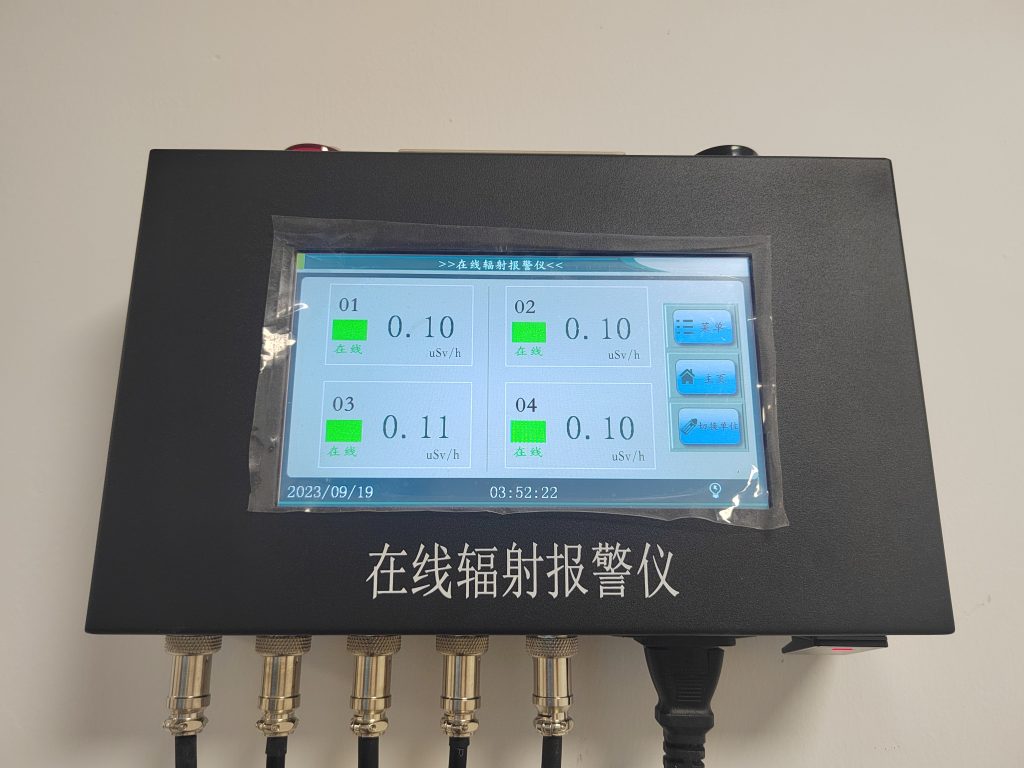
The radiation monitoring host unit is typically wall-mounted in the control room, allowing personnel to view real-time readings from all connected detectors at a glance. The host is equipped with an integrated buzzer and alarm indicator lamp; when the dose rate at any monitoring point exceeds the preset alarm threshold, audible and visual alarm activation occurs.
In addition, the host provides an alarm relay output signal that can be interlocked with the electric lock of the radiation shielding door, preventing inadvertent access by personnel unaware of the radiological conditions inside.
All monitoring point data is simultaneously uploaded in real time to the supervisory radiation analysis software for centralized statistical processing, data analysis, archival storage, and report generation.
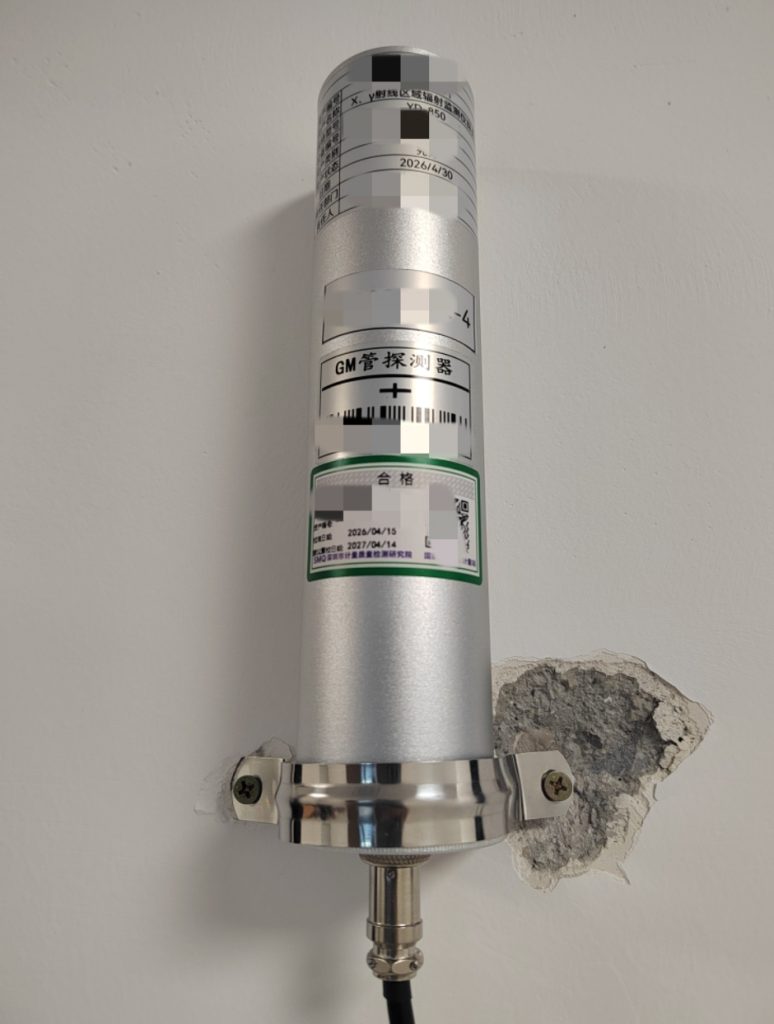
The detectors are positioned at critical locations within the FLASH irradiation experimental area to capture instantaneous dose rate transients. For this deployment, the client installed multiple radiation detector probes. Those placed inside the FLASH equipment room serve primarily to indicate the operational status of the irradiation device (beam ON/OFF), where dose rate accuracy is of secondary importance. In contrast, detectors installed in the personnel operating room are tasked with real-time monitoring for any radiation leakage and verifying that radiological protection measures meet regulatory compliance. These detectors require significantly higher measurement accuracy and probe sensitivity, as they provide a visual, real-time indication of the radiation protection status for personnel, offering a reliable data reference for occupational safety.
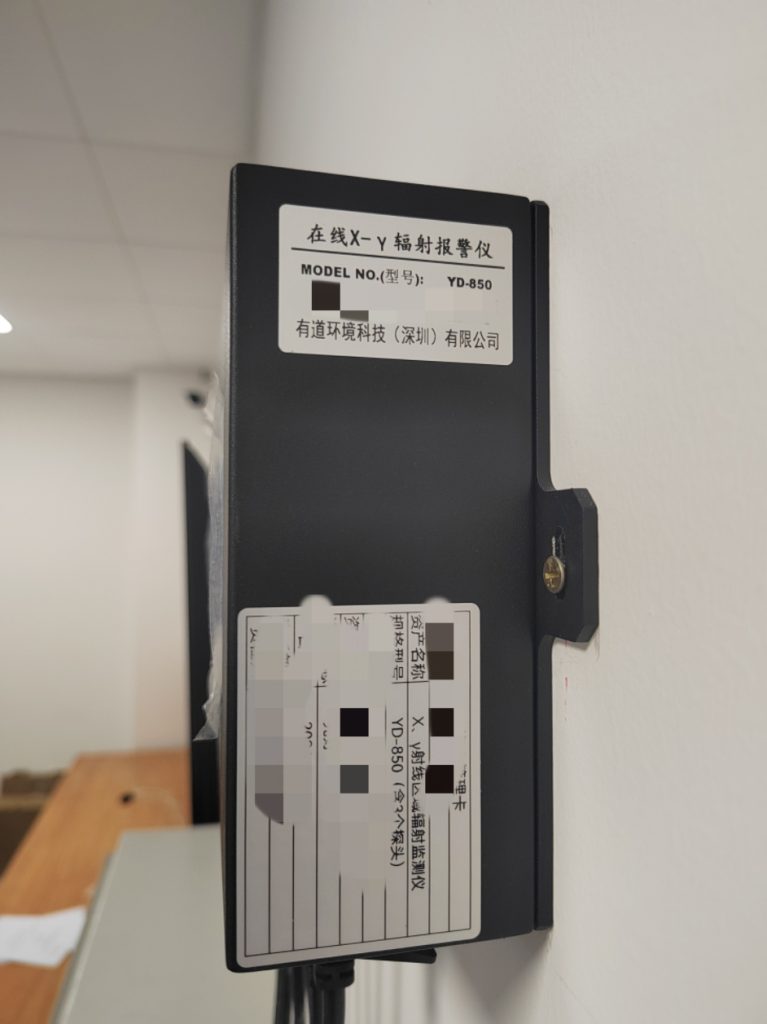
As illustrated, the radiation monitoring system employs a split-type architecture: the detector probes are connected to the host unit via shielded cables, utilizing the RS485 communication protocol for data transmission, thereby ensuring both data integrity and real-time performance.
Key Features of the System in the FLASH Irradiation Laboratory Application
- Supports high dose rate radiation environment monitoring
- Fast response time, suitable for pulsed radiation fields
- Enables continuous online monitoring
- Fulfills the radiation safety management requirements of research laboratories
Summary
Following the completion of system installation, the radiation monitoring setup provides stable radiation monitoring and safety assurance support for the FLASH irradiation experimental platform, delivering the necessary data basis for safe laboratory operations and enhancing the overall level of radiation management from the administrator’s perspective. The radiation monitoring system deployed in this project is Model YD-800; a comparable product in our lineup is the Model YD-850 Online Radiation Monitoring System.