
Overview
Industrial radiography constitutes a significant non-destructive testing (NDT) technique in modern industry. It utilises X or γ radiation to penetrate materials, enabling the detection of internal defects such as cracks, porosity, and inclusions. Its principal advantage lies in revealing internal structure without compromising the integrity of the workpiece, making it particularly prevalent in welded structure inspection. Despite limitations in cost and throughput efficiency, radiographic testing remains widely applied across industrial manufacturing, petrochemical processing, aerospace, automotive production, foundry and forging operations, and various specialised sectors.
Radiographic equipment is categorised into mobile units for field operations and fixed installations. The subject of this document is the application of fixed radiographic equipment, for which a dedicated shielded enclosure — commonly referred to as a radiographic exposure room — serves as the operational facility.
Given the use of ionising radiation, appropriate radiological protection measures must be implemented to ensure that personnel may conduct operations in a safe environment and that both the enterprise and the public are protected from radiation hazards.
The core functions of a fixed radiographic exposure room are twofold: containment of the radiation beam within the shielded enclosure, and prevention of unauthorised entry or erroneous operation.
Accordingly, the protection configuration for such a facility is generally structured into four categories:
- Structural shielding
- Active safety interlocks
- Radiation monitoring and alarm systems
- Administrative and supporting measures
1. Structural Shielding
This constitutes the first line of defence and is classed as passive protection.
Shielding Walls
- Concrete walls (commonly adopted), or steel plate / lead plate composite structures.
- Function: Attenuation of X and γ radiation leakage.
- Thickness: Calculated and designed according to the equipment energy rating (kV / MeV).
Shielded Door
- Lead door or steel-lead composite door, manually or electrically operated.
- Requirements: Shielding capability equivalent to that of the adjacent wall; no radiation leakage through door gaps.
Observation Window (Lead Glass)
- A lead-glass observation window is provided for safe visual inspection of the interior from the control area.
2. Interlock and Control System (Prevention of Erroneous Operation)
This is the critical system for accident prevention.
Door-Radiation Interlock System
The following logic shall be mandatorily implemented:
- Door not fully closed → exposure cannot be initiated.
- Exposure in progress → door cannot be opened. This is a mandatory requirement.
Emergency Stop (E-Stop)
- Emergency stop devices shall be installed both inside the exposure room and at the control station. Activation immediately terminates the radiation output.
Delayed Exposure Control
- A configurable delay (e.g., 5–10 seconds) is applied prior to the commencement of exposure, allowing personnel sufficient time to evacuate.
3. Audible and Visual Alarm System
The alarm system serves to signal the presence of radiation. Real-time indication is recommended.
Exposure Warning Light
- A red warning lamp is mounted outside the door, indicating “Exposure in Progress.”
Audible Alarm
- An audible warning is sounded prior to exposure initiation.
- An audible tone may also be maintained during exposure.
Standard operational logic:
Audible alarm sounds first → radiation output is then enabled.
4. Radiation Monitoring Equipment (Critical)
Radiation monitoring equipment is employed for real-time confirmation of safe conditions.
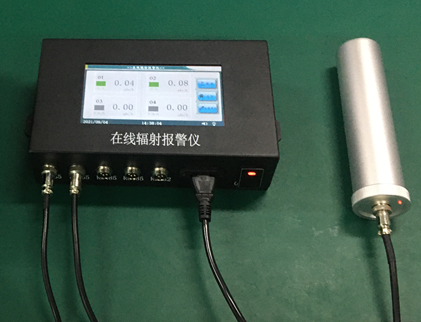
Fixed Radiation Area Monitor
- Installed outside the exposure room or within the controlled area.
- Provides real-time display of dose rate.
Personal Dosimeters (Personnel Worn)
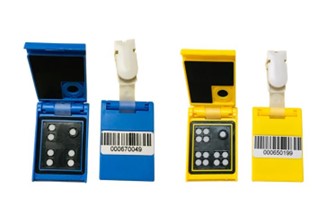
Two types are commonly employed:
Thermoluminescent Dosimeter (TLD)
Electronic Personal Dosimeter (EPD)
Both are used to record the cumulative radiation dose received by individual personnel.
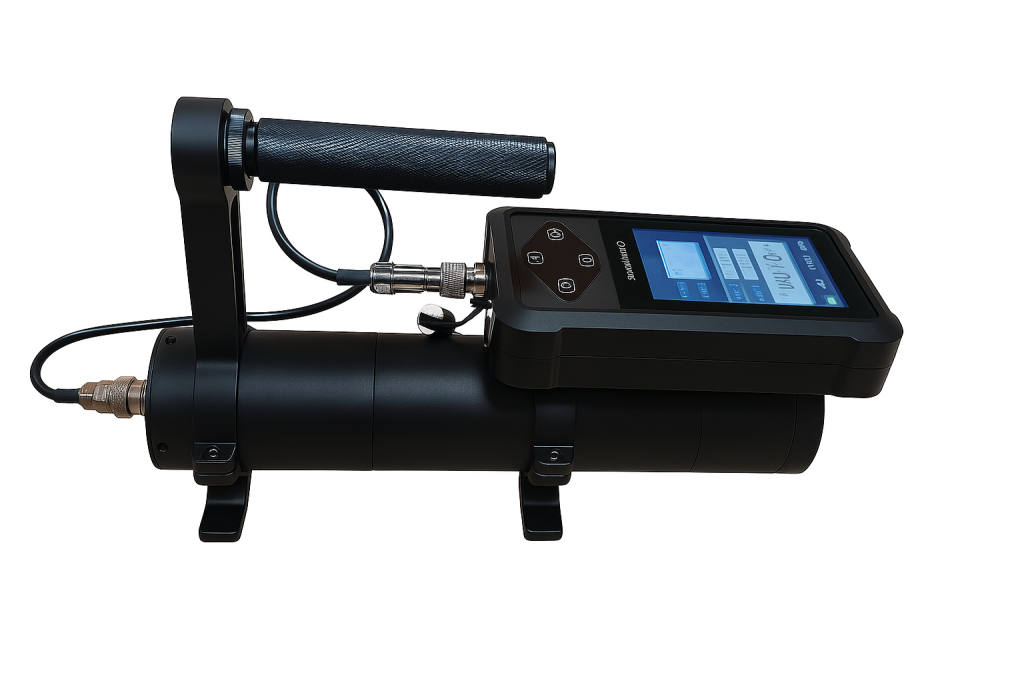
Portable Radiation Survey Meter
Used for:
- Routine patrol inspection
- Radiation leakage inspection
- Fault investigation
5. Safety Auxiliary Facilities
These items are often overlooked but are essential:
Access Control / Key Management System
- Operation is restricted to authorised personnel only.
Video Surveillance System
- Used to verify that no person remains inside the exposure room prior to initiation of exposure.
Intercom System
- Enables communication between personnel inside and outside the exposure room.
Radiation Protection Signage
- “Ionising Radiation” warning signs shall be posted.
- Zone markers (controlled area, supervised area) shall be clearly displayed.
6. Administrative and Management Provisions
Strictly speaking, these are not equipment items, but their implementation is mandatory:
- Operating procedures
- Radiation safety training
- Emergency response plan
- Periodic third-party inspection and testing
In practice, the majority of incidents are attributable not to insufficient wall shielding thickness, but rather to interlock failure or unauthorised personnel entry in violation of procedures.
It is observed that in a number of smaller enterprises, monitoring equipment has been installed but remains unused, effectively serving as a nominal measure.
Applicable national standards (e.g., GB standards in China) impose stringent requirements on both the interlock system and the alarm system.
Product information and technical datasheets are available at:
YD-800 X/γ Online Radiation Alarm Monitor
Protection-Level X/γ Dose Rate Meter